

Behind the Scenes: Replacing a Cooling Tower Motor on a Commercial HVAC System

Cooling a commercial building is not as simple as turning down the thermostat.
On hot Minnesota days, there is a lot of equipment working behind the scenes to keep offices, schools, healthcare facilities, industrial spaces, and other commercial buildings comfortable. One important part of that process is the cooling tower.
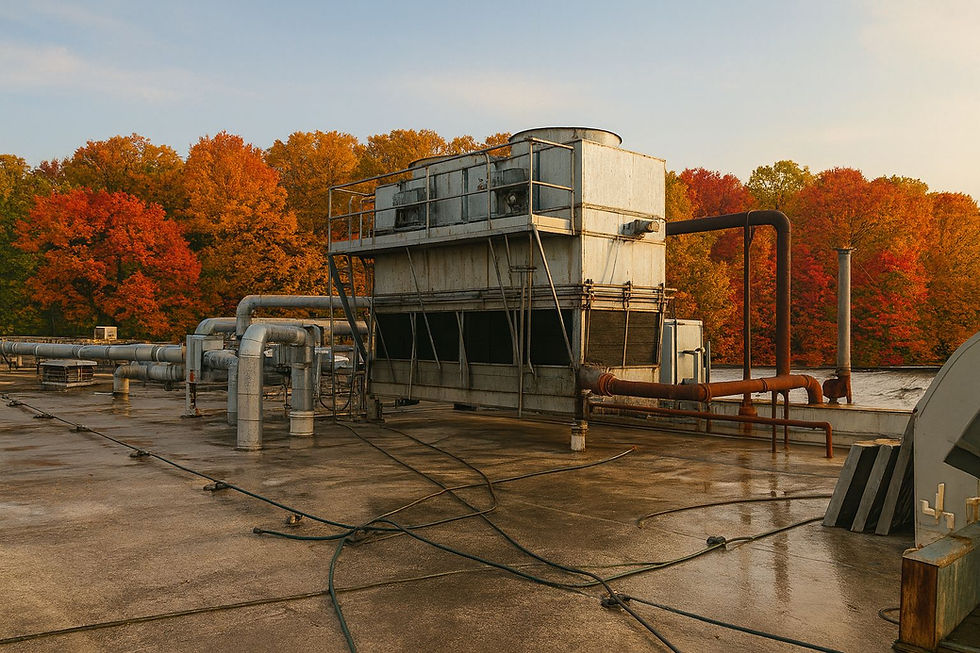
Recently, the Owens team completed a cooling tower motor replacement, giving us a closer look at the type of work that helps keep commercial HVAC systems running when buildings need them most.
What Does a Cooling Tower Do?
A cooling tower is part of many larger commercial HVAC systems. Its job is to help remove heat from the building.
In simple terms, water absorbs heat from the HVAC system as it helps cool the building. That warm water is then sent to the cooling tower, where heat is released into the outside air. Once the water is cooled, it can be sent back through the system to continue helping maintain comfortable indoor temperatures.
When everything is working properly, this process happens continuously in the background. Building occupants may never think about it. Facility teams, however, know how important cooling towers are to overall system performance.
Why the Motor Matters
The motor is a critical component of the cooling tower. It powers the fan that moves air through the tower, helping release heat from the water as part of the cooling process.
When a cooling tower motor starts to fail, the system may not be able to reject heat as effectively. That can lead to reduced cooling performance, higher strain on other HVAC equipment, comfort issues inside the building, or even unexpected downtime.
In a commercial facility, those problems can become serious quickly, especially during peak cooling season.
What Goes Into a Cooling Tower Motor Replacement?
Replacing a cooling tower motor is not a small task. It requires planning, coordination, proper safety procedures, and technicians who understand large commercial HVAC systems.
Depending on the system, the work may involve accessing equipment in tight or elevated spaces, disconnecting and removing the existing motor, aligning the new motor, checking belts or drive components, verifying electrical connections, and testing the system once the replacement is complete.
It is the kind of work that often happens out of sight, but it plays a major role in keeping a facility comfortable and operational.
Signs a Cooling Tower Motor May Need Attention
Cooling tower motor issues are not always obvious at first, but there are warning signs facility teams can watch for, including:
Unusual noise or vibration
Reduced cooling performance
Motor overheating
Frequent trips or electrical issues
Worn belts or drive components
Inconsistent fan operation
Higher-than-normal energy use
Catching these issues early can help reduce the risk of larger repairs or unplanned outages.
The Value of Preventive Maintenance
A cooling tower motor replacement is a good reminder of why preventive maintenance matters. Regular inspections can help identify worn components, alignment issues, belt wear, bearing concerns, electrical problems, and other early signs of trouble before they affect the entire system.
For commercial buildings, preventive maintenance is not just about keeping equipment running. It is about protecting comfort, reducing downtime, supporting energy efficiency, and extending the life of major HVAC equipment.
Keeping Minnesota Buildings Comfortable
Most people do not see the equipment that keeps a building cool. They just know whether the space feels comfortable.
Behind that comfort is a network of mechanical systems, components, and skilled technicians working to keep everything operating as it should.
This cooling tower motor replacement is one example of the behind-the-scenes work that helps commercial facilities stay cool and comfortable during Minnesota’s warmest days.
Emergency repairs are never convenient, especially when they require a 24-hour emergency service call during peak cooling season. Owens preventive maintenance helps reduce the risk of unexpected breakdowns by keeping critical HVAC equipment inspected, maintained, and ready to perform.
Need help now? Owens also provides emergency commercial HVAC service when your system goes down.
Contact Owens to learn more about preventive maintenance for your commercial HVAC system.

Comments